A studio owner sends the same equipment list to four suppliers and receives four very different prices. One quotation includes a jump board and export packing. Another does not say which springs are supplied. A third gives a low unit price but leaves the shipping term unclear. At that point, the cheapest column in the spreadsheet is not necessarily the cheapest offer.
The useful comparison starts after every supplier is quoting the same configuration, scope and level of support. The process below is designed for studio openings, distributor purchases, private-label projects and other commercial orders.
First, establish who you are buying from
“Manufacturer” is used loosely online. The company answering your inquiry may own a production facility, coordinate work through partner factories, or trade finished equipment from several sources. None of those arrangements is automatically wrong, but the answer changes what the supplier can control and what you should verify.
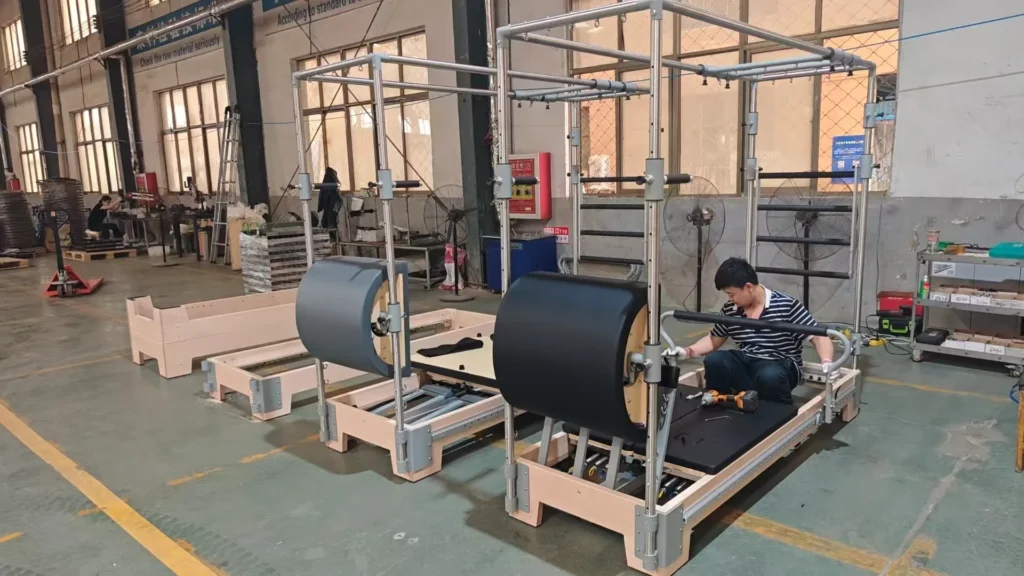
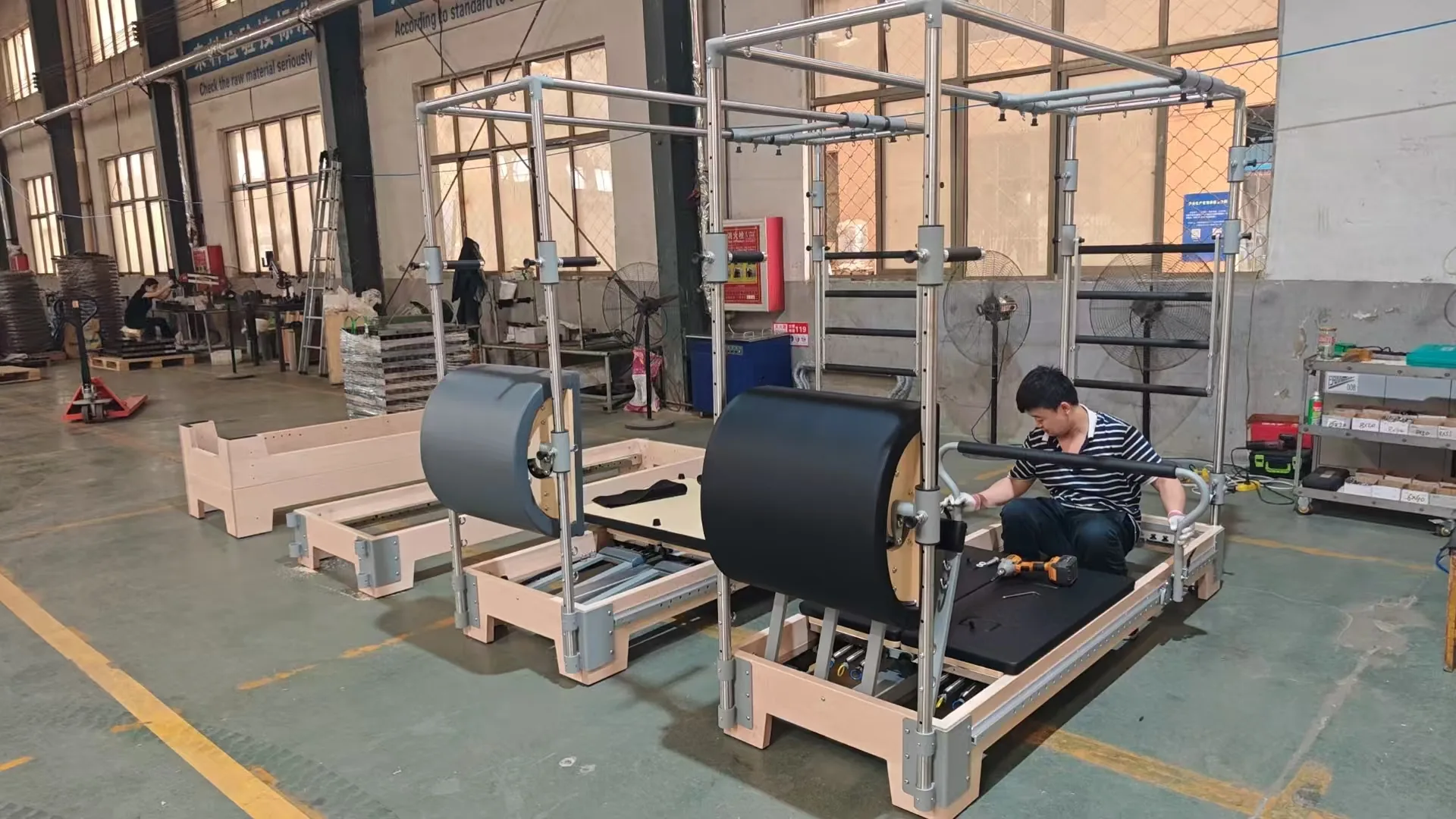
Ask for recent, model-relevant evidence: equipment being assembled, adjustment points being checked, finished units awaiting inspection, and the packing method used for an order like yours. A live video call can be more useful than a polished factory montage. During the call, ask the contact to move from one stage to another or show a specific component you named in advance. That makes it harder to substitute generic footage.
Also check that the legal company on the quotation, contract and receiving account is explained clearly. If another company manufactures or exports the goods, ask how the parties are related and who carries responsibility for quality and after-sales issues.
How Yichuan handles this conversation
Yichuan Pilates is based in Ningbo, China and manufactures Pilates equipment in its own production facility. Our team manages manufacturing, quality inspection, packing and after-sales coordination. Buyers can review our published production evidence, choose the relevant business-buyer route, and discuss the exact model, configuration, quantity and destination before a quotation is prepared. This is an example of the information a supplier should be willing to put into a commercial discussion—not a reason to skip your own checks.
Put every model on the same specification sheet
Two reformers can look similar in a catalogue while arriving with different frames, carriage dimensions, upholstery, springs and accessories. Before comparing prices, create one requirement sheet and ask each supplier to mark every line as included, optional or unavailable.
| Comparison point | What to record | Evidence to request |
|---|---|---|
| Model and frame | Exact model, material, finish, overall and working dimensions | Current specification sheet and photos of the quoted model |
| Moving system | Carriage travel, wheels/bearings, ropes, pulleys and adjustment method | Close-up photos or a short operation video |
| Resistance | Spring quantity, resistance mix and attachment points | Written configuration and labelled spring photo |
| Upholstery | Colour, surface material, padding and cleaning guidance | Physical sample where practical, or colour reference with limitations noted |
| Included accessories | Box, jump board, platform extender, straps, handles and any tools | Itemised packing list |
| Commercial scope | Packing, spare parts, documents, Incoterm and delivery point | Itemised quotation with exclusions |
Do not rely on a model name alone. Keep the approved specification and quotation together so that the final inspection can be checked against the same document.
Look for build evidence, not adjectives
“Premium,” “commercial grade” and “heavy duty” are not inspection criteria. Ask to see the parts that affect daily use: frame joints, carriage movement, stopper positions, footbar adjustment, rope routing, pulley alignment, spring attachment, upholstery seams and exposed edges. If you are buying several equipment types, repeat the check for each model rather than assuming one sample represents the whole order.
A sample can be worthwhile for a new relationship or a heavily customized product, but agree on what the sample is meant to confirm. Appearance alone is not enough. Record the configuration, operate every adjustment, listen for unusual noise, check the carriage through its travel, and photograph the label or identifying details. If the production order later changes, require the revised specification in writing.
Ask how quality control is recorded
A statement that “every unit is inspected” needs a second question: inspected for what, and how is the result tied to your order? A useful QC discussion covers appearance, dimensions or configuration where relevant, moving and adjustment functions, accessory count, packing condition and the way exceptions are handled.
Before placing the order, agree on the evidence you will receive before shipment. That might be a checklist, order photos, a short function video or a third-party inspection arranged by the buyer. The format can vary; the important point is that both sides know the acceptance basis before production is finished.
Compare the complete quotation, not the first number
A usable quotation names the model and quantity, lists included accessories and customization, states the packing method, identifies the currency and payment terms, gives an estimated production schedule, and defines the Incoterm with a named place or port. “FOB” without a port and “door to door” without a delivery scope leave room for expensive misunderstandings.
Build a landed-cost worksheet even if freight will be booked later. The structure is:
Equipment + options + export packing + origin charges + international freight + insurance + import charges + local delivery + installation or assembly costs
For example, an offer can be lower at unit level but exclude jump boards, wooden packing and origin handling. Once those items are added, it may sit above a higher-looking quote that included them. This is a comparison method, not a prediction of actual logistics or import costs; those depend on the route, shipment and destination rules.
Treat lead time as a production plan
Ask what starts the clock. Is it the deposit, final artwork approval, upholstery confirmation or another milestone? Then separate estimated production time from inspection, packing, export handling and transit. A supplier should also explain what happens if you approve a colour or logo late.
For a studio opening, work backwards from the date the equipment must be usable—not merely the date it should leave the factory. Leave time for freight variability, customs, local delivery, assembly and a practical check before customers arrive. The relevant lead time is the one confirmed for your actual model mix and quantity.
Packing deserves its own review
Ask for photos of the packing method used for the same equipment type. Check how moving parts and accessories are secured, how finished surfaces are protected, whether individual packages are identifiable, and whether the outer dimensions and weights will be supplied for freight planning. If wooden cases are quoted, confirm whether treatment or marking requirements apply to the destination.
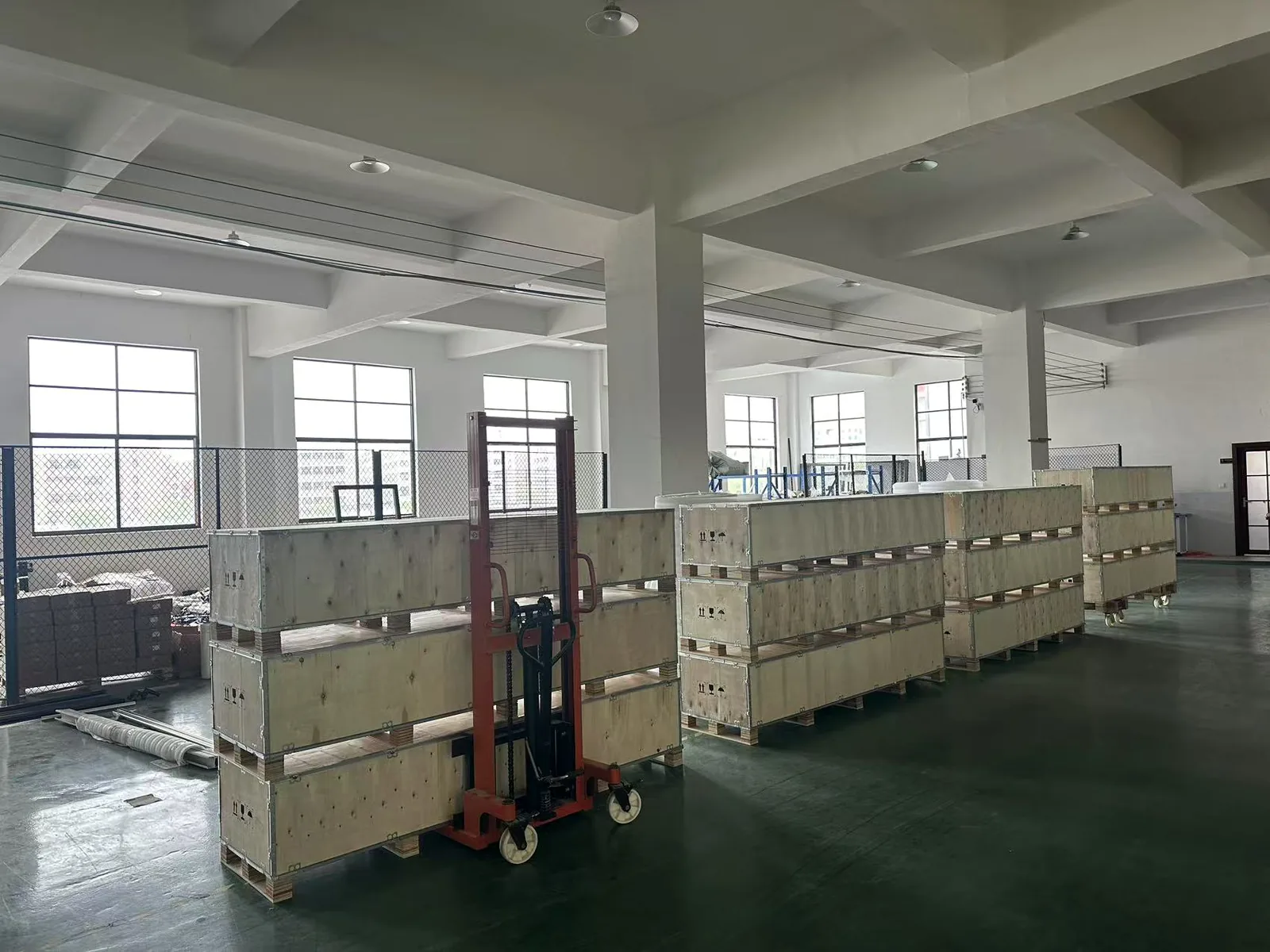
Review the supplier’s shipping and warranty information, but make sure the order documents state what applies to your purchase. General website wording should not replace an order-specific packing list and delivery scope.
Plan for parts and after-sales questions before you need them
Ask how future parts are identified. Will the supplier need a model name, order number, serial label, photo or dimensions? Confirm which commonly replaced items can be ordered, who pays freight in different scenarios, and which channel handles technical questions. A fast sales reply does not automatically mean the same team will manage after-sales support.
If you operate multiple locations or distribute equipment, consider a small project-specific spare-parts kit. The right contents depend on the models, quantity and service plan, so ask for a recommendation and price it separately rather than accepting a vague promise that parts are “available.”
For OEM work, freeze the brief before production
Private-label orders add more approval points: colour references, logo size and position, marking, packaging artwork and any configuration changes. Put them into one version-controlled brief. Ask which choices are available, what requires a sample or proof, which changes affect price or schedule, and when each item becomes final.
Our OEM/ODM service overview explains the customization conversation, while the Downloads page provides reference material for preparing an inquiry. Availability and technical details still need to be confirmed for the selected product and order.
Warning signs worth slowing down for
- The model or included accessories change between messages without a revised quotation.
- Factory or QC evidence stays generic when you ask about a specific product.
- The supplier will not state exclusions, packing method or the named Incoterm location.
- Customization is promised immediately, but nobody asks for artwork, colour references or approval dates.
- Payment is requested to a different entity without a clear written explanation.
- Every answer is “yes” until you ask for it to appear in the specification or contract.
One unclear answer may be a communication issue. A pattern of evasive or changing answers is a commercial risk.
Use a weighted score instead of choosing by instinct
Score each supplier from 1 to 5 against criteria agreed by your team. A practical starting point is: specification and build evidence 25%, quotation completeness and total cost 20%, QC and packing 20%, communication and production planning 15%, after-sales and parts 10%, and commercial/company verification 10%. Multiply the score by the weight and keep a note explaining every low or high mark.
Change the weights to suit the project. A distributor may give more weight to repeatability, branding and parts. A single studio may care more about configuration, delivery timing and installation planning. The purpose is not to manufacture a precise-looking number; it is to make the team discuss trade-offs using the same evidence.
Questions you can send to every shortlisted supplier
- Are you the manufacturer of the quoted models? If another company is involved, what is its role?
- Can you send recent photos or video showing this model in assembly, inspection and packing?
- Please confirm the exact frame, carriage, spring, rope, pulley, upholstery and adjustment configuration.
- Which accessories are included in the unit price, and which are optional?
- What customization is available for this quantity, and what approvals are required?
- What checks are completed before packing, and what order-specific QC evidence can you provide?
- What packing method is included? Please provide the expected package count, dimensions and gross weight.
- Which Incoterm and named place or port does the quotation use, and what charges are excluded?
- What event starts the production schedule, and which approvals could change it?
- How are replacement parts identified and ordered after delivery?
- Which company name will appear on the quotation, contract and receiving account?
- Can you issue a final specification and packing list that will be used for pre-shipment confirmation?
Related Articles
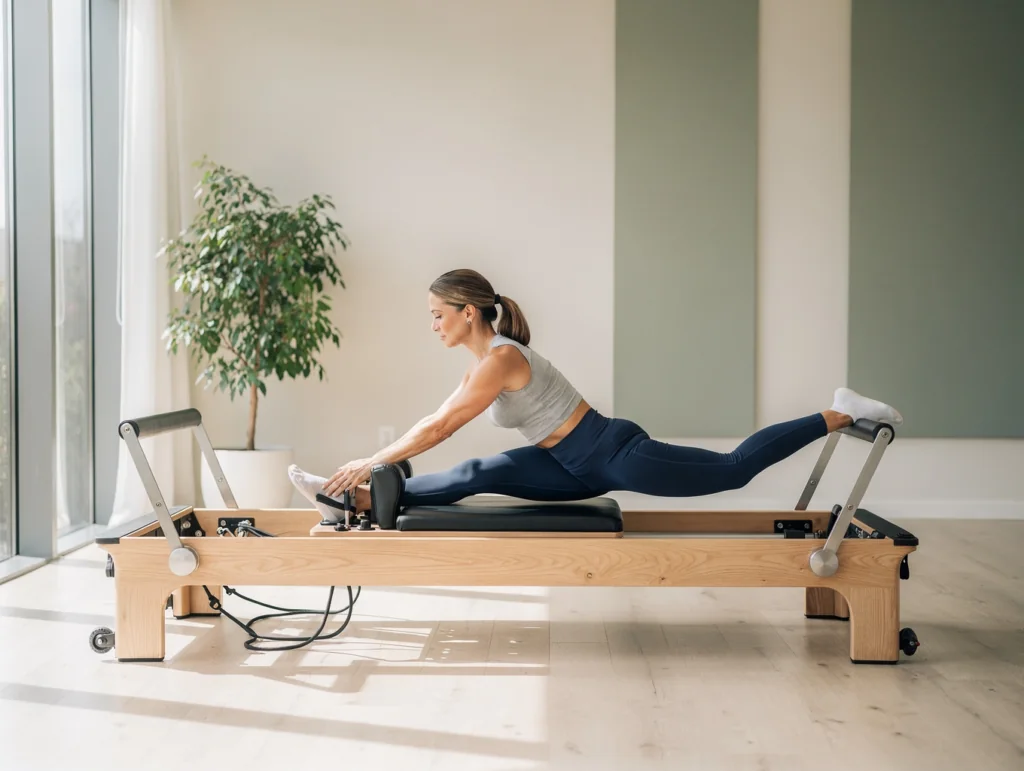
Pilates Reformer for Sale: Common Purchasing Mistakes Studios Should Avoid
Avoid common specification, configuration and service mistakes when sourcing reformers for a professional studio.
Read Article
Why Pilates Reformers Have Different Prices: A Studio Buyer’s Guide
Understand the commercial factors behind reformer quotations and compare offers on a consistent basis.
Read Article
What Distributors Should Confirm Before Bulk Ordering Pilates Equipment
A distributor checklist for confirming models, documentation, packing and support before a bulk order.
Read ArticleNeed help selecting Pilates equipment?
Tell us your studio size, equipment requirements, quantity and destination country. We will help review suitable equipment options for your project.