You have found a Pilates reformer that looks right, but there is still a practical question: will it work in your room, for the way you train, and within the budget you actually have? A machine that suits a dedicated studio may be inconvenient in a spare bedroom that needs to become an office again after each session.
To choose the right Pilates equipment, decide what you will use it for first. Then check the working space, adjustment range, included accessories and total delivered cost. This guide covers home buyers and studio owners, with a closer look at how to choose a Pilates reformer.
Start with the way you will use the equipment
For home practice
Write down whether the equipment can stay set up, who will use it and where you will get instruction. If two people share a reformer, both need to try the settings. If it must be moved after every session, request a demonstration of the entire storage routine, not just a photo of it folded.
For a Pilates studio
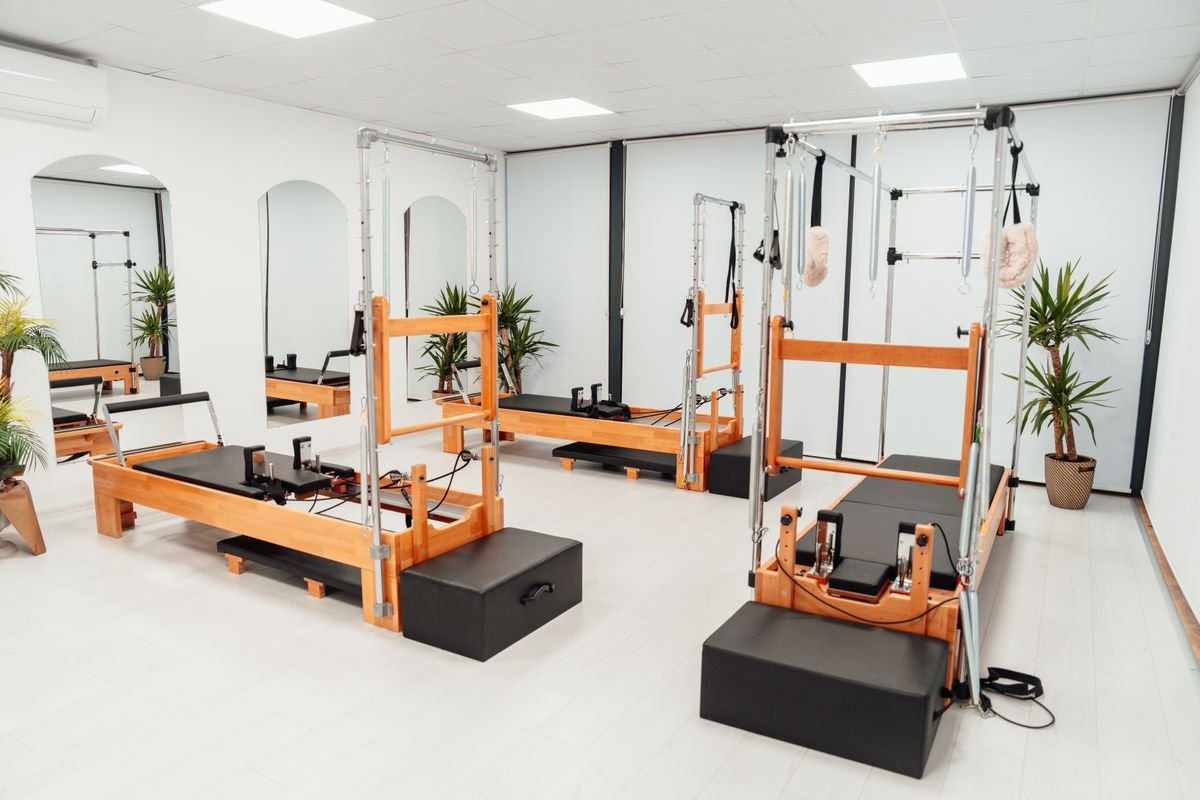
Begin with the classes you intend to teach. A group reformer room, a private teaching space and a mixed-equipment studio need different purchase lists. Merrithew’s home and studio reformer buying guide distinguishes domestic space and adjustability needs from studio concerns such as frequent use, servicing and client comfort.
For a commercial Pilates reformer order, have your lead instructor approve a sample configuration before confirming a roomful of machines. Record the footbar, springs, ropes, carriage height and accessory package against the model reference. Our studio equipment planning guide goes further into building the full equipment mix.
Which type of Pilates equipment fits your plan?
You do not need every apparatus at the beginning. Choose the equipment your instruction or class plan calls for, then identify which additions can wait.
| Equipment | Consider it when | Check before ordering |
|---|---|---|
| Mat and small props | Your instruction is based on mat work and you need equipment that packs away. | Mat dimensions, grip, storage and the props your instructor actually uses. |
| Pilates reformer | You want a sliding-carriage, spring-based apparatus for reformer practice. | Carriage travel, footbar settings, springs, working footprint and user limits. |
| Reformer with tower | Your programme includes both reformer work and exercises using tower attachments. | Ceiling clearance, compatible attachments and whether a mat conversion is included. |
| Cadillac / trapeze table | Your instructor needs a fixed raised table with an overhead frame. | Assembled height, access around the table and the exact bars, springs and safety accessories supplied. |
| Pilates chair | Your programme includes exercises using a spring-loaded pedal. | Single or split pedal, handles, adjustment method and the space needed to use it. |
| Barrel or spine corrector | Your instruction calls for work on a curved support surface. | The specific apparatus, curve, dimensions, padding and any adjustable spacing. |
A chair is not simply a smaller reformer, and a tower is not automatically compatible with every reformer frame. Compare the apparatus with your planned exercises before comparing prices. For a fixed-table setup, see the Cadillac buying guide.
Measure the working space, not just the machine
Balanced Body’s reformer selection guide highlights floor area, clearance around the equipment, ceiling height and storage arrangements. Those are separate questions: a frame may fit between two walls while leaving too little room for the intended movement.
Request an assembled dimension drawing for the exact model. Mark its outline on the floor, then review the surrounding working area with your instructor using the manufacturer’s clearance requirements. Include nearby doors, furniture, mirrors and the route into the room.
Keep three measurements separate on your comparison sheet: assembled size, approved storage size and packed shipping size. A wooden crate measurement does not tell you the space needed for practice. A product photograph is not a substitute for verified dimensions.
Is a folding Pilates reformer right for a small room?
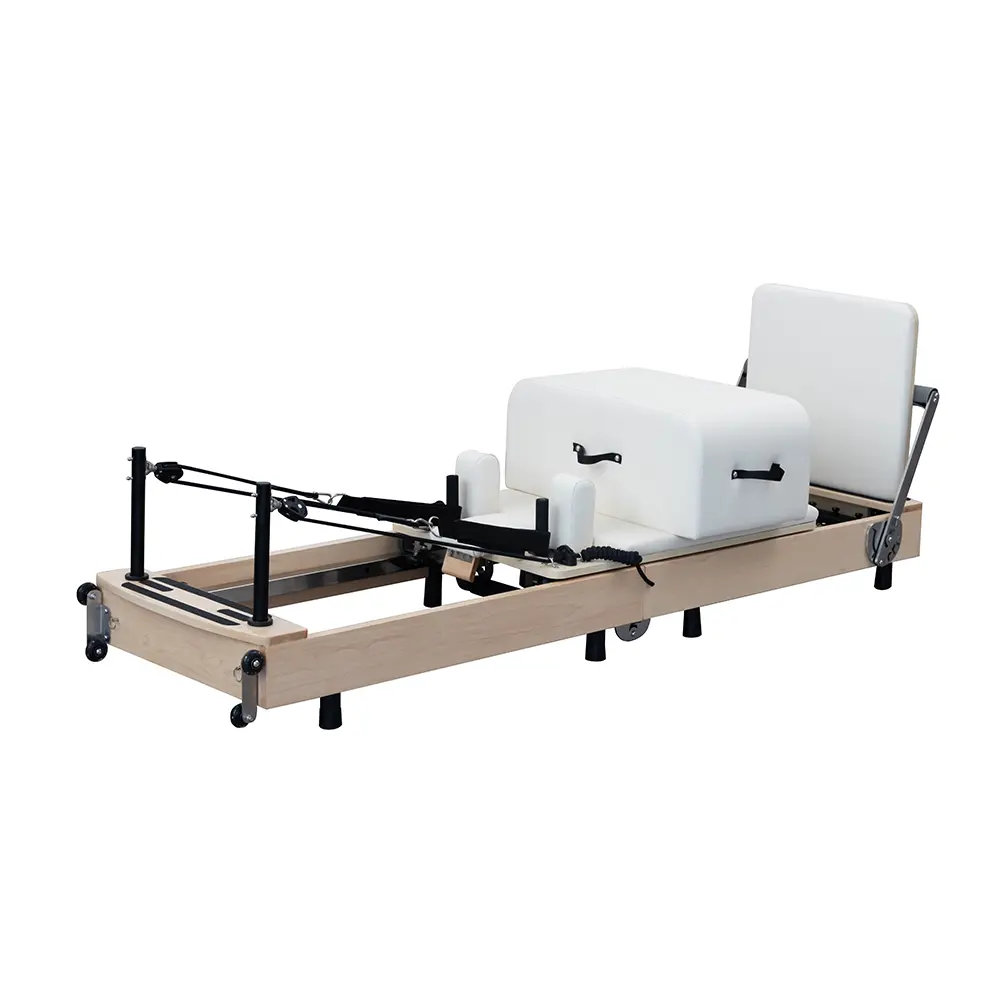
It may be worth shortlisting if the room has another use. Confirm how the frame locks when opened, how the carriage is secured for storage, which accessories must be removed and how the equipment is moved. Do not assume a folding model can also stand vertically; use only the storage positions approved for that exact unit.
Check the fit and adjustments before choosing a reformer
A longer frame alone does not establish whether a machine suits a particular person. During a supervised trial, check where your feet meet the footbar, how the shoulder supports feel and whether the available carriage travel suits the exercises you intend to practise.
Have the seller demonstrate each adjustment on the model you are considering. You should be able to identify the locking positions, follow the rope adjustment procedure and understand the manufacturer’s spring selection instructions. Ask for the manual before purchase, along with the stated user limits.
If a trial is not possible, a detailed demonstration video and configuration sheet can help you shortlist, but they cannot confirm personal comfort. Avoid ordering on appearance alone.
Wooden or aluminum frame?
Treat frame material as one comparison point, not a quality verdict. Compare the actual model’s joints, carriage system, finish, dimensions and documented use conditions. The same applies to a “commercial” label: ask what use the manufacturer permits and what support accompanies the machine. Read our wooden versus aluminum reformer comparison before making material your deciding factor.
Compare complete quotations, not the headline price
Two similar-looking machines may be quoted with different equipment. A sitting box or jumpboard visible in a photograph may be optional. Request an itemised list covering the reformer, spring set, ropes or straps, loops, box, jumpboard, tower components and any assembly tools relevant to your order.
For budgeting, use:
Equipment + selected accessories + packing + freight + applicable import charges + local delivery and assembly.
Some items may already be included; have the supplier mark them clearly so you neither miss nor double-count them. State the destination country and delivery requirements when requesting a quotation. An upper-floor delivery with restricted access is different from delivery to a loading area.
Before paying a deposit, resolve who handles unloading, whether assembly is required and what the packing contains. Our packing and shipping guide explains the questions to settle with the supplier.
Make replacement parts part of the buying decision
Request the warranty terms and replacement-part references for the selected configuration. For each wear item, establish how to identify it, how to order it and whether the supplier can provide the matching part. Keep that information with the invoice and equipment manual.
For a studio, also decide who will inspect the equipment and where those checks will be recorded. Use the manufacturer’s maintenance and replacement instructions; do not invent a universal spring replacement interval. Our Pilates equipment maintenance guide can help you organise the routine.
A short checklist to send with your enquiry
A clear enquiry is more useful than asking for the “best reformer”. Send:
- Use: home practice, private instruction or group studio classes.
- Space: usable room dimensions, ceiling height, access restrictions and storage needs.
- Equipment: product links or model references, quantity and required accessories.
- Users: the adjustment and access needs your instructor has identified.
- Delivery: destination, preferred delivery period and whether assembly support is needed.
- Budget: whether your budget covers equipment only or the complete delivered order.
Use the Yichuan Pilates equipment catalogue to shortlist models, then send your requirements for a quotation. Final dimensions, accessories, finish, packing and commercial terms should be confirmed for the selected order.
Frequently asked questions
What Pilates equipment should a beginner buy first?
Start with the equipment used in the instruction you plan to follow. Mat-based lessons do not require buying a reformer. If you want reformer practice, take instructor-led sessions before committing to a machine so you can compare the adjustments and setup with something you have actually used.
Do I need a tower with my first reformer?
Only if your planned instruction calls for it. Check the ceiling height, attachments and conversion arrangement. If you want to add a tower later, get written confirmation that the exact frame supports the proposed upgrade; visual similarity is not proof of compatibility.
How much space does a home Pilates reformer need?
There is no single room-size answer for every model and exercise. Use the assembled drawing plus the manufacturer’s operating clearances, then check your layout with an instructor. Add storage and delivery access to the assessment if the machine will not remain in place.
Can a home reformer be used in a commercial studio?
Do not assume so. Confirm that the manufacturer permits the intended commercial use and that the warranty, service arrangements and replacement parts cover that use. Price and appearance alone do not establish suitability.
Cover photo: Ahmet Kurt / Pexels, used under the Pexels License. This is an illustrative studio photograph, not a Yichuan installation or customer endorsement. Equipment guidance is for purchasing decisions and does not replace instruction or the selected manufacturer’s manual.
Related Articles

How to Choose the Right Reformer Leather and Upholstery
Review upholstery choices for cleaning, comfort, durability and the visual identity of your studio.
Read Article
A Practical Guide to Pilates Reformer Springs and Resistance Systems
Understand reformer spring configurations, resistance planning, inspection and replacement considerations.
Read Article
Cadillac Trapeze Table Buying Guide for Pilates Studios
Key questions for evaluating frame stability, working surface, attachments and studio fit.
Read ArticleNeed help selecting Pilates equipment?
Tell us your studio size, equipment requirements, quantity and destination country. We will help review suitable equipment options for your project.