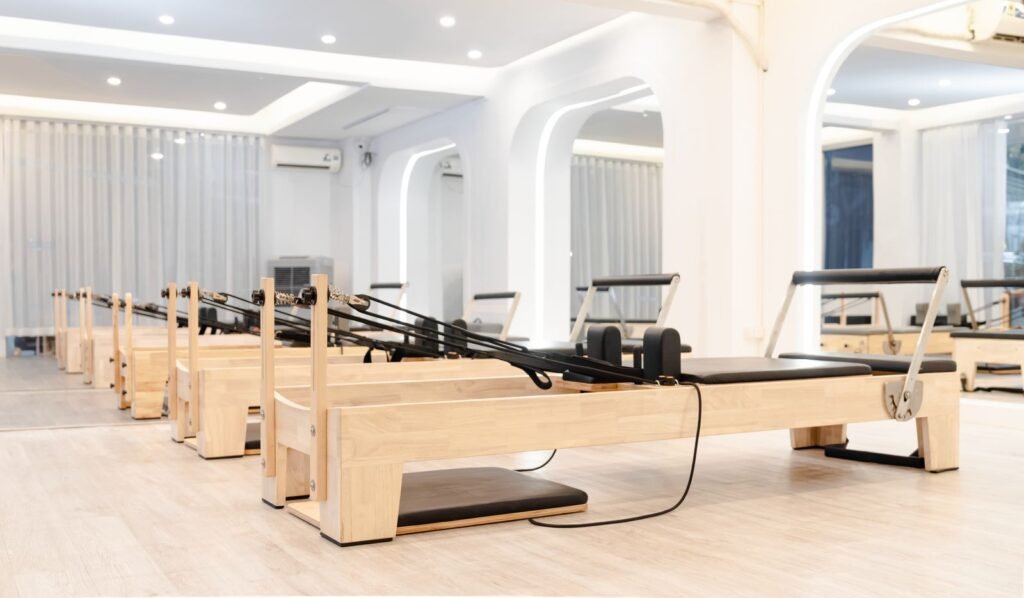
A wood-framed reformer changes the feel of a studio before anyone gets on the carriage. The grain gives a room some of the warmth of furniture, especially beside cream walls, timber floors and soft lighting. That appearance is a good reason to choose one. It should sit alongside the less photogenic questions: how the machine is set up, who adjusts it between clients and what the finish needs after a busy day.
The appeal of a wooden frame
Wood works well in a room built around warm colors. Pale oak can sit quietly with ivory upholstery and linen curtains; a deeper walnut-tone finish gives beige, terracotta or muted green more contrast. In a small studio, where the reformers occupy most of the floor, the frames become part of the interior rather than something to decorate around.
Look at an actual finish sample next to the floor and upholstery sample before ordering a roomful of machines. A photograph rarely shows whether the wood leans yellow, red or grey under your lights. The finish also matters for cleaning, so ask how that particular frame should be wiped down.
The frame material alone does not tell you how smoothly a reformer runs or how much it weighs. Those details depend on the complete model, including its carriage, rails, springs and hardware. If the room is cleared for mat classes, ask for the assembled weight and the approved way to move the exact model.
Set up the machine before the first client arrives
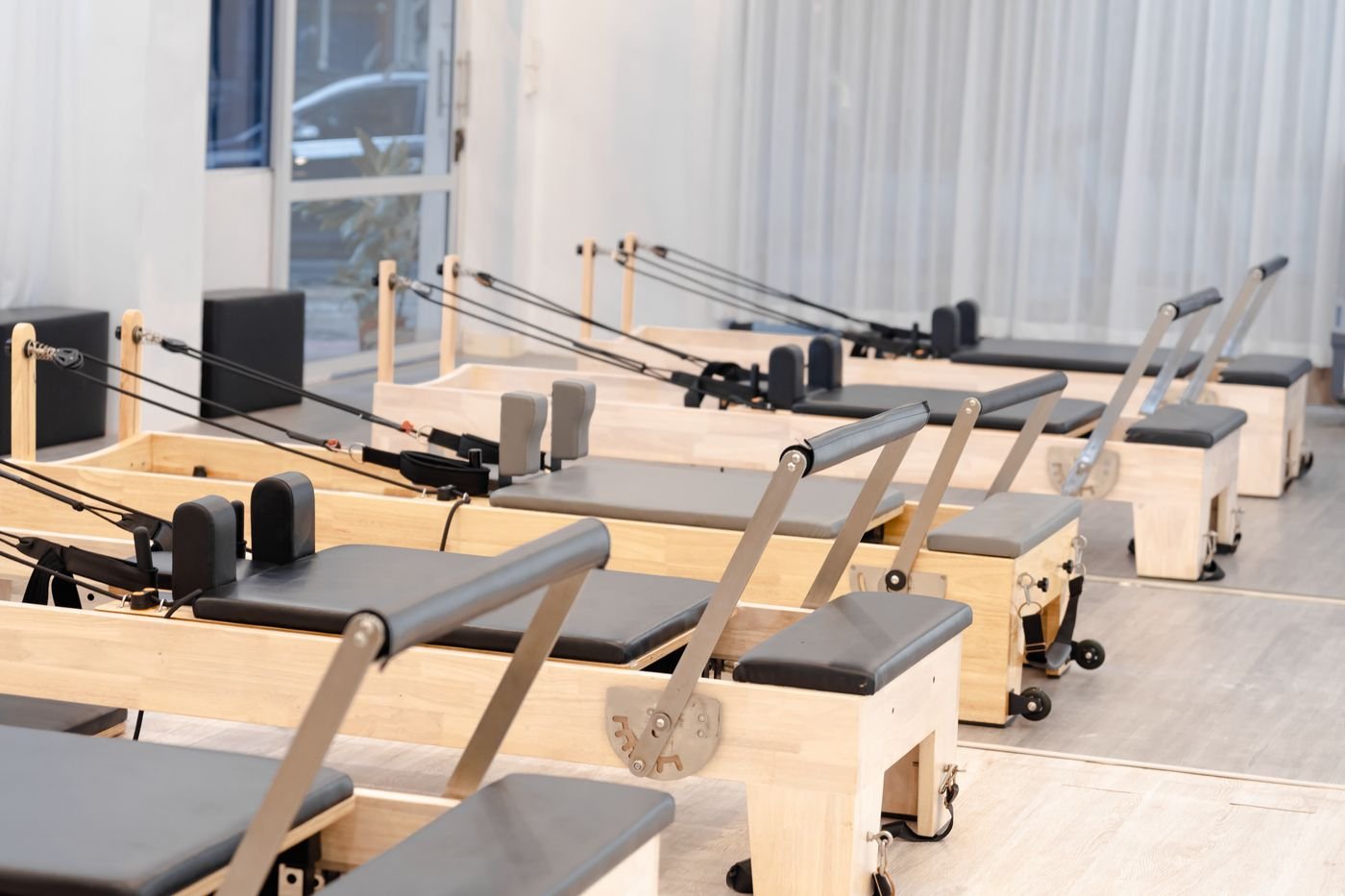
Give each reformer a level, stable place and enough clearance for the exercises you plan to teach. Assemble and adjust it according to that model's manual, then move the carriage through its travel by hand. It should roll cleanly, without catching or rubbing. Check that the footbar, shoulder rests, ropes and spring attachments are secure. If anything feels loose or uneven, keep the machine out of class until it has been checked.
An instructor should set the spring resistance, footbar and carriage-stop position for the person and exercise before the client starts. The adjustment method is model-specific. For example, Merrithew's Essential Reformer Manual says the carriage should be unoccupied when changing its gearbar or stopper. That is a useful reminder to read the instructions supplied with your own equipment rather than copy settings from a different reformer.
During the session, keep the carriage movement controlled and use only the configuration taught for that exercise. Stop if a spring looks distorted, a rope is fraying or the carriage begins to travel differently. Align-Pilates' maintenance guide calls for regular checks of those parts; replacement schedules should follow the maker of the machine in your studio.
Keep the wood looking good after class
Clean the upholstery and touch points using products approved for those surfaces. For the wooden frame, remove spills promptly and use the cleaning method recommended for its finish. Do not leave a wet towel draped over the rail or soak the wood while cleaning the padding. Wood responds to changes in moisture, as the USDA Wood Handbook explains, so a reasonably stable indoor environment helps protect the finish.
Rails, wheels, ropes and springs need their own inspection. Wiping the frame will not fix a rough carriage or a worn attachment. Keep a simple log of changes in movement, visible wear and parts replaced; our studio equipment maintenance guide has a practical checklist.
Check the model, then choose the finish
A warm room is a strong argument for wood, but a quotation still needs the unglamorous details. Confirm the actual timber and finish, the assembled size and weight, the supplied spring set, included accessories and the care instructions. If you are considering a darker look, Yichuan's Walnut Wood Pilates Reformer uses a solid red-oak structure with a walnut-tone finish; ask for the current upholstery and finish options for the exact configuration you want. For a wider comparison of frame materials, see our wood-versus-aluminum guide.
Photos are used as studio-design references under the Pexels License, which permits free commercial website use. They do not depict a stated Yichuan installation.
Related Articles
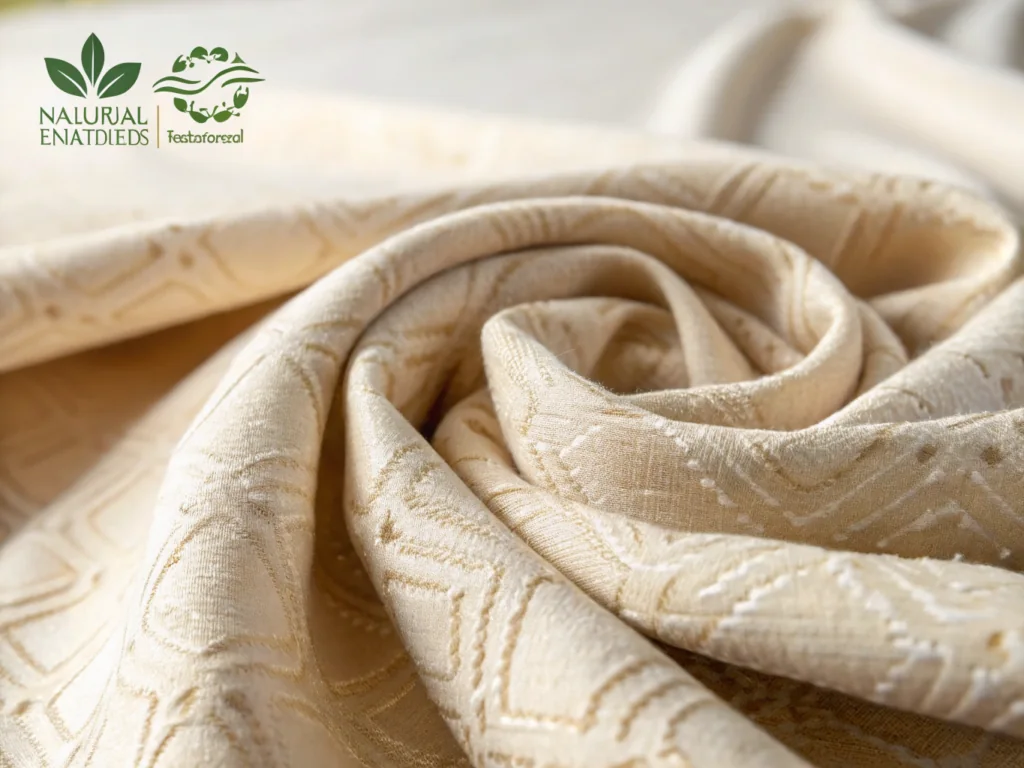
How to Choose the Right Reformer Leather and Upholstery
Review upholstery choices for cleaning, comfort, durability and the visual identity of your studio.
Read Article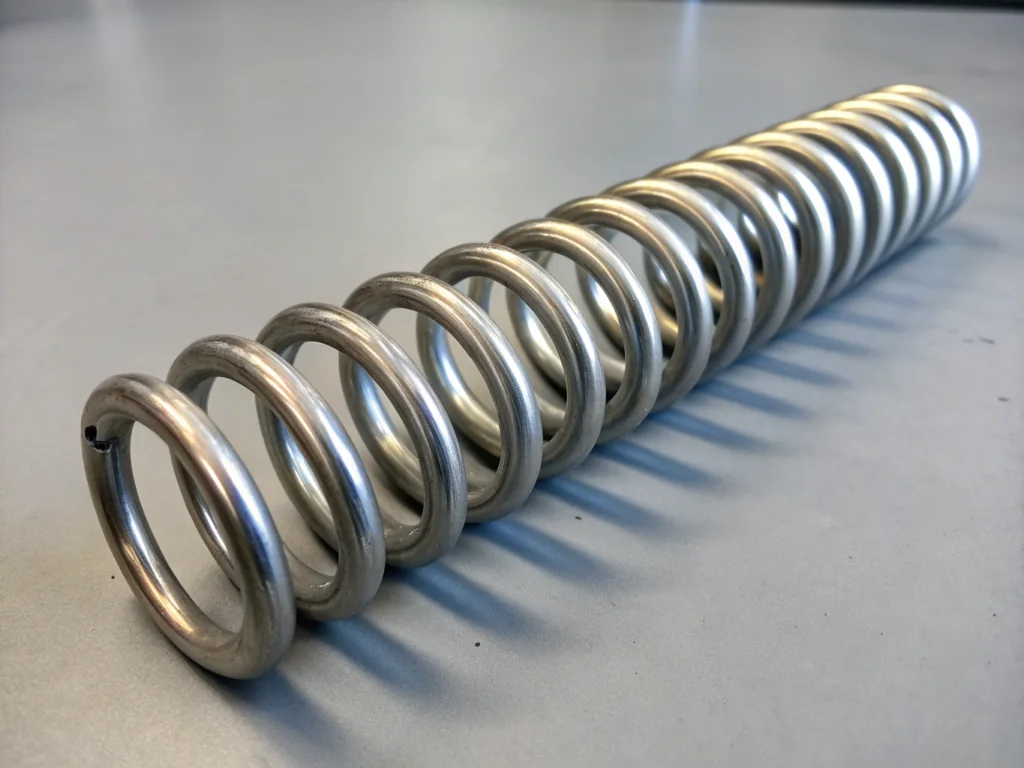
A Practical Guide to Pilates Reformer Springs and Resistance Systems
Understand reformer spring configurations, resistance planning, inspection and replacement considerations.
Read Article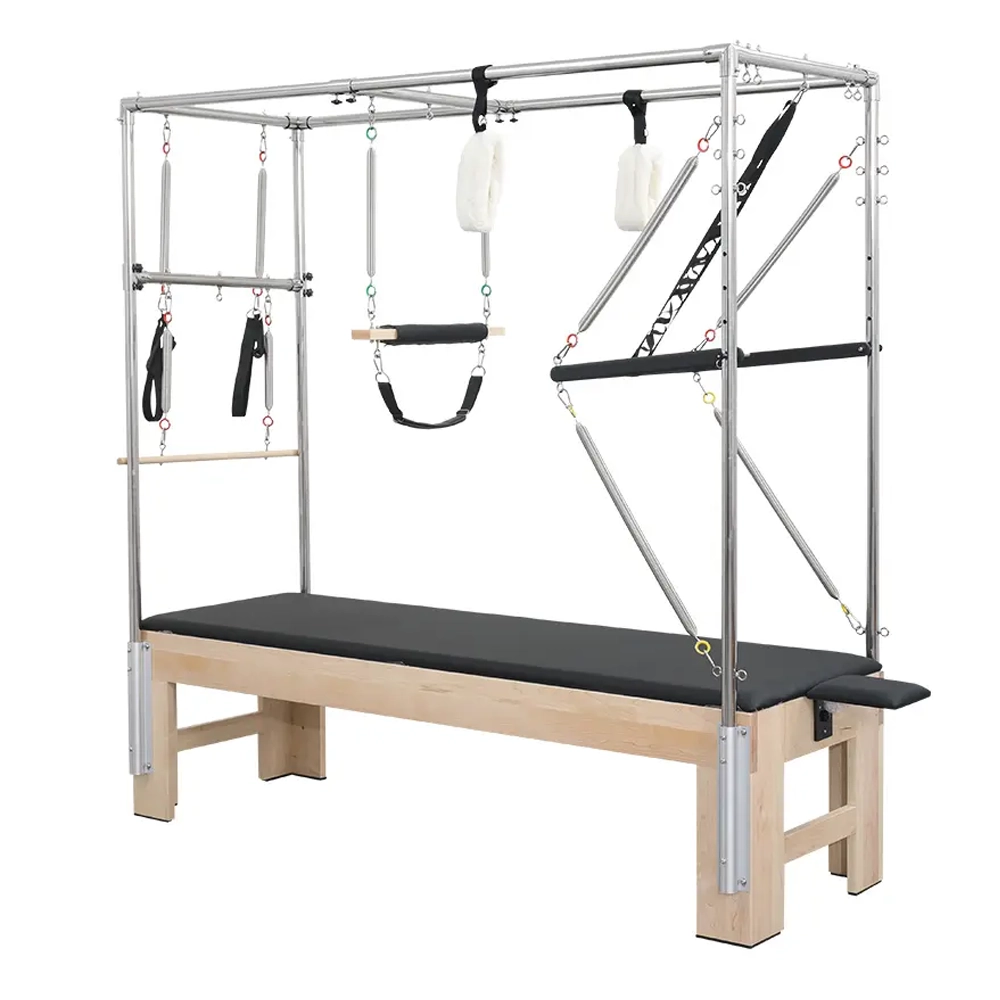
Cadillac Trapeze Table Buying Guide for Pilates Studios
Key questions for evaluating frame stability, working surface, attachments and studio fit.
Read ArticleNeed help selecting Pilates equipment?
Tell us your studio size, equipment requirements, quantity and destination country. We will help review suitable equipment options for your project.