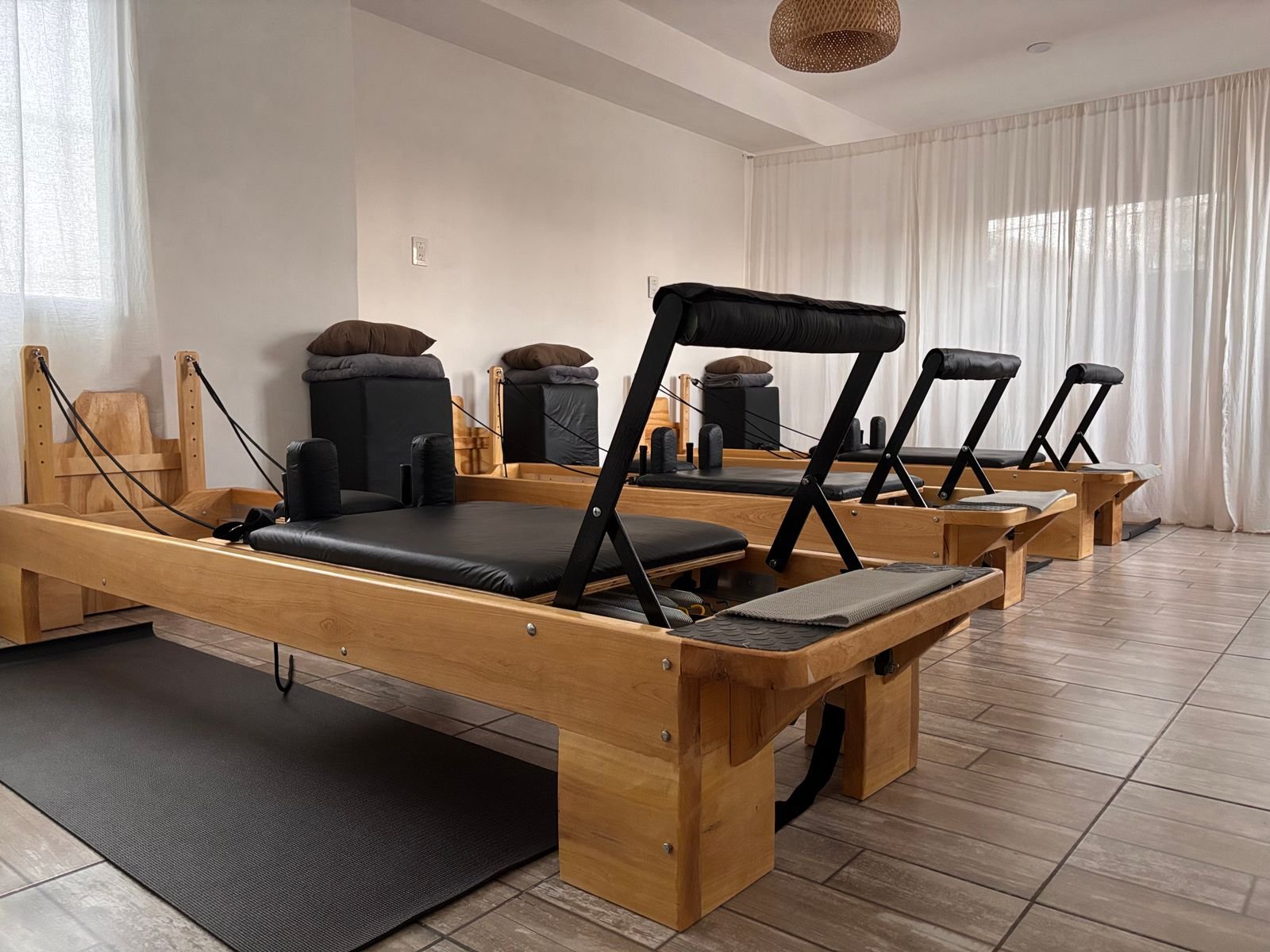
You have chosen the floor, settled on the wall color and worked out where the reformers will sit. Then two frame options arrive in the quotation: wood and aluminum alloy. Both may fit the room on paper, yet a row of wooden frames will look quite different from a row of pale metal ones. The choice also deserves a closer look if the equipment needs to move between classes.
Wood brings warmth into the room
A wooden reformer has some of the visual character of furniture. The grain breaks up a large frame, and the natural variation gives a row of machines a less uniform appearance. In a studio with cream walls, linen curtains and warm lighting, that can feel elegant without much extra decoration.
Light wood works comfortably with sand, oatmeal and soft sage. Deeper brown finishes suit terracotta, tobacco and muted cream. Black upholstery adds definition; beige or taupe creates a softer overall palette. These are useful starting points, especially when the equipment occupies most of the room.
Look at the floor and frame samples together. Two wood finishes can be close in color but quite different in undertone: a yellow frame beside a pinkish floor may feel less settled than a deliberate light-and-dark contrast. A small upholstery sample viewed under the studio lights is more useful here than another screen rendering.
Wood is a particularly appealing choice for a studio where the reformers stay in place and form part of the interior. The practical specification still matters: “wooden frame” does not tell you the timber species, construction method or protective finish.
Aluminum offers a cleaner, more uniform look
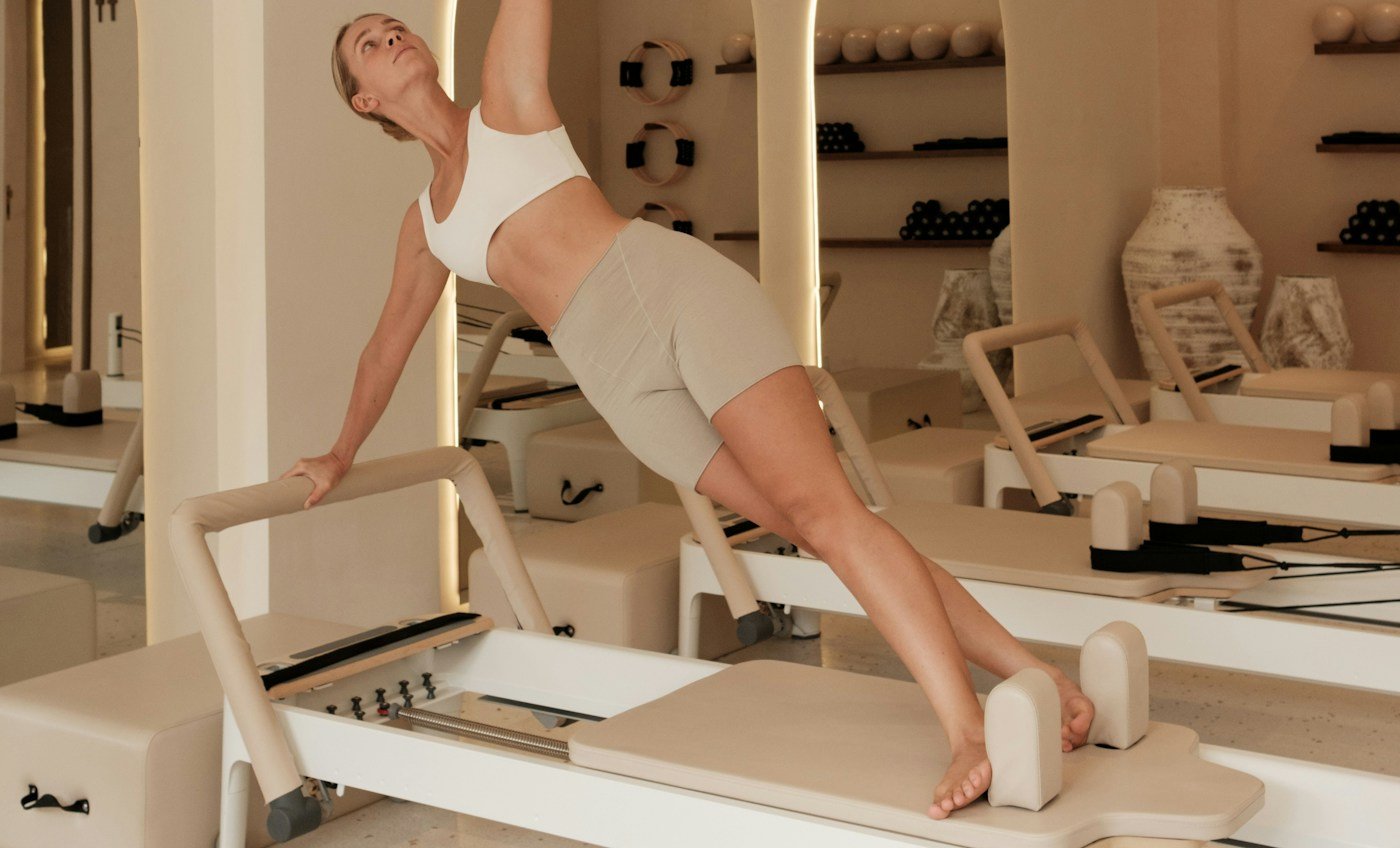
Aluminum alloy allows manufacturers to create frame profiles with crisp lines and consistent finishes. Silver gives a more technical appearance; black can look understated against a darker floor. Pale coated frames work well in bright rooms where the equipment should feel visually light.
A metal frame can also belong in a warm interior. Cream upholstery, a soft frame color and natural textures around the room can take the edge off the industrial look people sometimes associate with aluminum. Color and finish influence the result just as much as the material underneath.
Finish options vary by manufacturer and model. Anodizing and powder coating are two established treatments for aluminum, but their appearance and care requirements differ. Hydro’s surface-treatment guide explains the distinction. For an order, confirm the actual finish and color reference rather than relying on “silver” or “white” in a quotation.
Is an aluminum reformer always lighter?
No. Aluminum alloy is useful for lightweight frame design, but the weight of a finished reformer also includes the carriage, rails, footbar, legs and other hardware. A tower adds another substantial assembly. Frame material alone cannot tell you how easy the machine will be to move.
For a concrete example, Balanced Body lists its aluminum Allegro 2 at 148 lb without legs and 155 lb with legs. Its maple Studio Reformer is listed at 152 lb. These are different models rather than a controlled material comparison, but the figures show why “aluminum means lighter” is too broad a rule.
If the room changes from reformer classes to mat work, compare net equipment weight in the exact configuration being ordered. Check the transport wheels, the approved moving method and any storage requirements too. A wheel kit may be optional, and upright storage is only appropriate for models designed for it. Shipping weight, including the crate, answers a different question.
What each material needs in daily care
Wood needs attention to moisture and its protective finish. Wipe up spills promptly and avoid leaving wet cloths on the frame. The USDA Wood Handbook describes how wood exchanges moisture with its surroundings; that is a reason to pay attention to the room environment, particularly where humidity changes considerably.
Aluminum forms a protective oxide layer, which contributes to its corrosion resistance. It still needs appropriate cleaning, and a coated surface can be scratched or damaged. Corrosion resistance does not mean that every fastener, spring or other metal part on the machine needs no care. Hydro’s material overview covers the underlying properties.
For either frame, use the equipment manufacturer’s cleaning instructions, including separate guidance for upholstery. Rails, wheels, ropes and springs need their own inspection routine. Our reformer maintenance guide covers the wider checklist.
The frame does not decide the whole ride
A wooden frame does not automatically make a reformer quieter, and aluminum does not automatically make it less stable. Carriage wheels, rail alignment, joints, floor contact and maintenance all deserve inspection. Spring configuration and adjustment also need comparing independently of the frame finish.
During a demonstration, listen as the carriage travels, check that the machine sits evenly and try the adjustments an instructor will use between clients. Ask for a demonstration of the same model and configuration on the quotation. A photograph can show the grain beautifully; it cannot show carriage movement.
Choose for the room you will actually run
Wood is a strong visual fit when natural texture, an elegant furniture-like appearance and a warm palette are central to the studio. It is easy to picture alongside timber cabinetry, soft curtains and earthy upholstery colors.
Aluminum is worth shortlisting when you prefer clean profiles and a consistent finish, or when the model offers useful handling and storage features. If light weight is the reason for choosing it, confirm the complete machine’s weight before ordering.
Put the two quotations beside the room plan, with the finish samples on the table. Compare the footprint, working clearance, net weight and included accessories, then look again at the colors. You can explore upholstery and color options before settling on the combination. That gives the final choice both a practical basis and a place in the room.
Cover photo: Maps Digital Marketing / Pexels, used under the Pexels License. Interior photo used under the Unsplash License. Studio photographs are included as design references. Model specifications checked September 14, 2026.
Related Articles
How to Plan a Pilates Studio Equipment Package
Plan an equipment mix around space, class formats, instructor workflow and future growth.
Read Article
How to Compare Pilates Equipment Suppliers: Price, Quality, Lead Time and Service
Compare Pilates equipment suppliers by factory evidence, build quality, quotation scope, QC, lead time, packing and after-sales support.
Read Article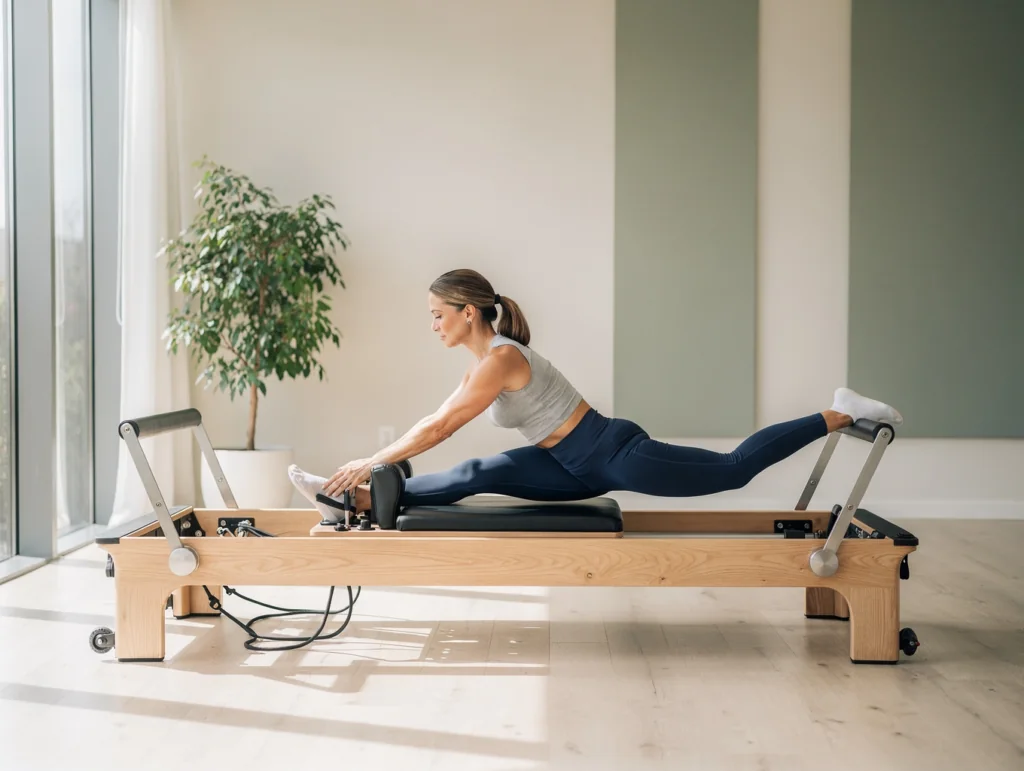
Pilates Reformer for Sale: Common Purchasing Mistakes Studios Should Avoid
Avoid common specification, configuration and service mistakes when sourcing reformers for a professional studio.
Read ArticleNeed help selecting Pilates equipment?
Tell us your studio size, equipment requirements, quantity and destination country. We will help review suitable equipment options for your project.